
Inkjet Textile Forecast 2025
The inkjet textile printing market is a complicated market. There continues to be a mismatch between demand and supply in the apparel market, in part because the supply chains are very long and in part because trends are fickle (with ever shorter shelf life due to social media influence). Discounts and written-off inventory keep margins low, except in the luxury good segment. Converters who print, cut, and sew are at the bottom of the value chain, and often are the ones squeezed most on margins.
The production inkjet textile business is a challenging business to make money in, mainly because there is an excess of aggressive price competition in hardware. The Chinese inkjet textile suppliers have gained of 2/3 of the new equipment market in 2024, as a lower manufacturing cost basis enables them to not only capture domestic China but also rapidly growing textile converter markets in Vietnam, Bangladesh, and India.
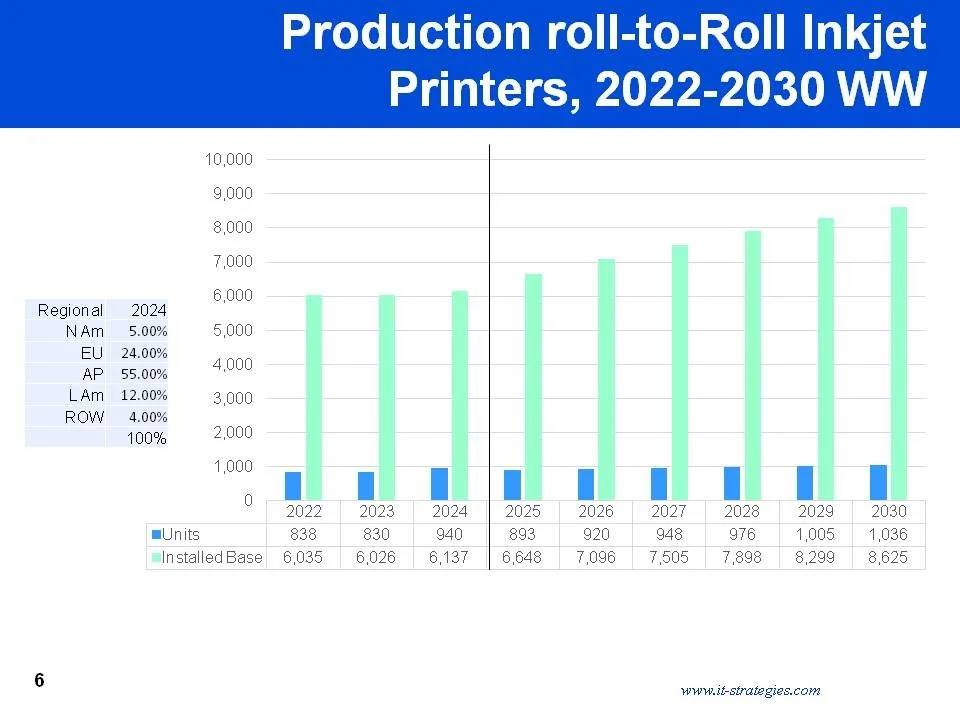
Figure 1 Production Roll-to-Roll Inkjet Textile Printers, 2022-2030 WW
Source: IT Strategies, Inc. 2025
The trends might be changing however, as trade tariffs are staging manufacturing to shift to Latin America/Mexico for the US market, and Turkey and Northern Africa for the European consumer. It is still early days, as those regions only account about 10% of all textile manufacturing, but it is likely to provide a lift for Western textile inkjet manufacturers as those converters seek productivity and service that is more reliable than that currently offered by Chinese textile equipment manufacturers.
Near-term regulatory mandates in both Europe (and eventually the US) are targeted at reducing excess production of apparel. These regulations should benefit inkjet textile printing in the long-term, as margins for apparel brands improve with the elimination of 4-8% of products that are currently written-off and the reduction of the 40+% of apparel volume that is currently discounted. This doesn’t mean it will get any easier to compete, as the inkjet textile printing markets has seen some of the greatest devaluation of any inkjet market outside of ceramic tile printing. But it does appear brighter horizons might be ahead.